Podcast: Play in new window | Download
Subscribe: RSS
What if the real engine of your screenplay isn’t plot—but the pressure that forces your character to choose?
For spoiler-safe listening: this episode touches on major story turns throughout. If you haven’t seen No Other Choice and want to go in completely cold, watch first—then come back.
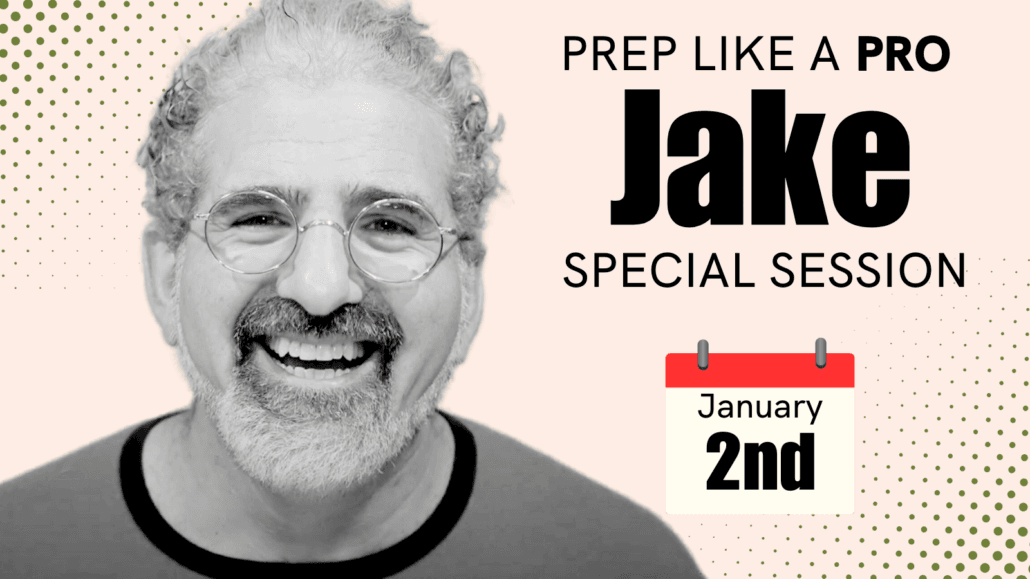
In this episode of the podcast, Jake takes a deep dive into Park Chan-wook’s No Other Choice to break down one of the most misunderstood concepts in screenwriting: the difference between plot and structure. Plot, he argues, is often interchangeable—”the crap that happens to happen.” Structure is what makes a script gripping: the choices a character makes in response to those events, and the escalating moral pressure that drives them toward transformation.
Using the film’s central premise as a dark, comic crucible, Jake shows how No Other Choice earns audience investment not by what happens, but by how a character responds to events—moment by moment, choice by choice—revealing a character driven by love, identity, and a desperate attachment to what he finds valuable. Along the way, Jake explores how theme isn’t something you declare—it’s something you construct, by repeatedly forcing your characters to deal with their changing reality in increasingly revealing ways.
As the episode builds, Jake connects the film’s intimate character tragedy to a larger thematic question about modern life—how we rationalise, compromise, and cling to identity no matter the cost—believing there is no other choice. The result is a craft breakdown that turns a provocative story into a clear structural lesson: plot is the surface—structure is the soul.
🎧 LISTEN NOW to learn how structure—not plot—creates empathy, suspense, and meaning.
Early in the film, the wife of one of the murder victims delivers an incredible thematic line about her laid-off husband: “Losing your job isn’t the problem. The way you deal with it is the problem.”
This line isn’t just about her husband. It is the theme of the entire film, and it perfectly illustrates the difference between plot and structure.
The plot of your movie is not the problem, and it’s also not the solution. Whether your character loses their job, wins the lottery, or gets caught in a thriller—that’s just plot. Plots are interchangeable. Structure is watching the deeply problematic ways your characters deal with the crap that happens to them.
In No Other Choice, the male characters have tied their entire identity and meaning to their jobs at the paper factory. When the plot strips that away, we watch them make the same toxic mistakes again and again, trying to hold onto a reality that no longer exists.
Need help figuring out how your characters deal with their problems?
Join us for Thursday Night Writes, our completely free weekly writing class. It’s the perfect place to bring your raw pages, test your concepts, and start building undeniable structure.
Most of your audience is never going to become a serial killer. They aren’t going to rob a bank or go to war. Which means what they are actually connecting to is not the plot—it’s the universal feeling of a character’s struggle.
When your protagonist is doing terrible things, the fastest shortcut to making the audience care is looking for the love. You have to find what the character is so desperately attached to that it drives them to make the wrong choice.
We can look at two classic examples of how to get underneath a dark character:
The main character in No Other Choice, Yu Monsu, is a Hamlet. He isn’t a sociopath. He’s a loving father who desperately wants to protect his home, his wife, and his daughter’s cello lessons. It’s his love that drives him toward murder, and his hesitation that makes us see ourselves up on that screen.
Writing a complex, morally gray protagonist?
If you are struggling to get underneath your character and find the “love” driving their dark choices, our One-on-One Mentorship program pairs you with a professional writer to help you crack your character’s psychology at a fraction of the cost of grad school.
As writers, we often think the job of a scene is to move the plot forward. Does he kill the guy or not? What plan does he come up with next?
The job of a scene is not to move the plot forward. The job of the scene is to be the scene. What makes us fall in love with a script is the specificity of the moment—watching it closely in your mind’s eye and letting each moment really matter.
When Yu Monsu stalks his first victim, he plans to drop a heavy potted plant on his head. But he hesitates. He loves gardening. We watch him lift a pot, put it down, and lift a bigger one, until disgusting, filthy water drips all over his face. The object he loves has been twisted into an object of violence. He is literally covered in the filth of what he is about to do. That level of specificity is what elevates you as a writer.
Almost every great movie could be called No Other Choice.
Your job as a writer is to build a vice. You want to push your character to the place where their belief systems are shattered, and they are forced to make a decision that will change them forever. You drive them to the point where they make a terrible choice, but that choice feels inevitable because, to them, there is no other way out.
Ready to build an unstoppable engine for your script?
If your script feels like it’s just a sequence of events without an emotional anchor, our Write Your Screenplay Foundation Class will teach you how to build this exact kind of structural pressure, moving your protagonist from their starting point into a true crucible of choice.
No Other Choice operates brilliantly as a dark comedy about a paper factory. But Park Chan-wook is holding his real theme in his back pocket until the very end.
When Yu Monsu finally gets his job back, we realize the factory has gone 100% automated. The company doesn’t need managers anymore; they just need one guy to turn the lights out.
This movie isn’t just about a man looking for a job. It’s a terrifying, modern exploration of AI and automation. The automated machines chopping up trees are a metaphor for the forces entirely beyond our control that are chopping up our livelihoods.
Theme isn’t a message you declare to the audience. It is the inevitable realization that emerges when you force your characters to deal with their changing reality. And like the characters in the film, the question for us isn’t whether the plot is happening—the question is how we are going to deal with it.
By registering for the Company’s course (the “Course”), you (“You” or “Participant”) are agreeing to the following terms of this Participant Agreement (the “Agreement”), which form a legal contract between you and Jacob Krueger Studio, LLC (“Company”) and governs your attendance at and/or participation in the Course.
Course Participation.
Admittance. Your registration entitles you to admittance to the Course. Any and all other costs associated with your attendance (including, without limitation, any travel or accommodation expenses) shall be borne solely by you and Company shall not be liable for any such costs.
Media. For good and valuable consideration, the receipt and sufficiency of which are hereby acknowledged, you grant Company the right to record, film, photograph or capture your likeness in connection with the Course, in any media now available and hereafter developed (“Course Footage”). You further grant to Company in perpetuity the rights to use, license, edit, copy, distribute, publicly display and make derivative works of the Course Footage, including exploitation for marketing, advertising or merchandising related to the Course, throughout the universe. You hereby waive any and all approval rights you may have over Company’s use of the Course Footage and acknowledge these rights are granted without any payment, including royalties or residuals, to you.
Code of Conduct and Penalties for Noncompliance. Participants agree to act professionally at all times and further agree that they shall not engage in any unprofessional behavior of any kind, including, but not limited to, harassment, discriminatory speech, spam, unauthorized promotion, or disruptive conduct of any kind both in connection with any Course, or any internet based community (the “Online Student Community”). You acknowledge and agree that Company reserves the right to remove you from the Course and from any accompanying Online Student Community if Company, in its sole and absolute discretion, considers your presence or behavior to create a disruption or to hinder the Course or any Online Student Community or the enjoyment of the Course or Online Student Community by other attendees or speakers. If removed you will lose access to the Course, all Course Materials, and any Online Student Community, but all other of your obligations and promises of this Participation Agreement shall remain in full force and effect. If a Participant is removed, they will not be permitted to register for any other Course unless approval is provided by the Company, such approval being in the sole and absolute discretion of the Company. At its sole discretion, the Company reserves the right to provide a pro-rated or no refund to a removed Participant.
Fee(s).
Payment. The payment of the applicable fee(s) for the Course is due upon registration or per your payment plan. If such payment is insufficient or declined for any reason, you acknowledge that Company has the right and sole discretion to refuse your admission to the Course.
Taxes. The fee(s) may be subject to sales tax, value added tax, or any other taxes and duties which, if applicable, will be charged to you in addition to the fee(s).
Refunds will not be offered except in accordance with any of the Company’s refund policies that exist from time to time.
Intellectual Property. All intellectual property rights, including trademarks, copyrights, trade secrets and patents, in and to the Course, the Course content and all materials distributed at or in connection with the Course (together, the “Course Materials”) are owned by Company. You may not use, license, copy, display, or make derivative works of the Course Materials without the prior written permission of Company. For the avoidance of doubt, nothing in this agreement shall be deemed to vest in you any legal or beneficial right in or to any trademarks or other intellectual property rights owned or used under license by Company or grant to you any right or license to any other intellectual property rights of Company, all of which shall at all times remain the exclusive property of Company.
Warranties; Limitation of Liability; Disclaimer.
Other than to the extent required as a matter of law: (i) neither Company nor its employees, agents or affiliates (together, the “Company Parties”) shall be liable for any direct, indirect, special, incidental, or consequential costs, damages or losses arising directly or indirectly from the Course or other aspect related thereto or in connection with this agreement. The maximum aggregate liability of Company Parties for any claim in any way connected with this agreement whether in contract, tort (including any negligent act or omission), or otherwise shall be limited to the amount paid by you to Company under this Agreement.
You represent and warrant that you have the full right and authority to grant Company the rights provided in this agreement and that you have made no commitments which conflict with this agreement or the rights granted herein. You agree that your participation in the Course is entirely at your own risk and accept full responsibility for your decision to participate in the Course. In no event shall you have the right to enjoin the development, production, exploitation or use of the Course and/or your contributions to it.
The Company cannot and does not guarantee any specific outcomes, career advancement, or success from participation in the Course or Program.
Nothing in this Agreement, or anything relating to the Course or the Company’s conduct in the running of its business operations, shall be construed to create an agency, partnership, joint venture, or employment relationship between you and the Company
Governing Law and Venue. This Agreement shall be governed by the laws of the State of New York without regard to its conflict of laws provisions. The parties hereto agree to submit to personal and subject matter jurisdiction in the federal or state courts located in the City and State of New York, United States of America.
Dispute Resolution. All claims and disputes arising under or relating to this agreement are to be settled by binding arbitration in the state of New York or another location mutually agreeable to the parties, including virtually on an agreed-upon platform; provided that nothing herein shall require arbitration of a claim or charge which, by law, cannot be the subject of a compulsory arbitration agreement. The arbitration shall be conducted confidentially and pursuant to the Commercial Arbitration Rules of the American Arbitration Association. The arbitrator, and not any federal or state court, shall have exclusive authority to resolve any dispute relating to the interpretation, applicability, enforceability, and/or formation of this Participation Agreement, including any dispute as to whether a particular claim is subject to arbitration hereunder. The arbitral award shall be in writing, shall state the reasons for the award, shall provide an explanation for all conclusions of law and fact, and shall be final and binding on the Parties. In agreeing to arbitrate their claims hereunder, the Parties hereby recognize and agree that they are waiving their right to a trial in court and/or by a jury. An award of arbitration may be confirmed in a court of competent jurisdiction.
Miscellaneous. Company may transfer and assign this Agreement or all or any of its rights or privileges hereunder to any entity or individual without restriction. This Agreement shall be binding on all of your successors-in-interest, heirs and assigns. This Agreement, and any other agreements that it is incorporated into, sets forth the entire understanding and agreement between you and the Company in relation to the Course and the matters addressed in the Agreement, and you acknowledge that in entering into it, you are not relying upon any promises or statements made by anyone about the nature of the Course or your contributions or the identity of any other participants or persons involved with the Course. This agreement may not be altered or amended except in writing signed by both parties.
Prevention of “Zoom-Bomber” Disruptions; Unauthorized Publication of Class Videos. Company will record each class session, including your participation in the session, entitled “The Videos”. To prevent disruptions by “zoom-bombers” and provide Company and participants the legal standing to remove unauthorized content from platforms such as YouTube and social media sites, you agree that
(1) you are prohibited from recording any portion of the Course;
(2) in exchange for the opportunity to participate in the Course, you assign to Company your verbal contributions to the session discussions.
To be clear, you assign to the Company only your oral statements during recorded Course sessions. You retain all copyright to any and all written materials you submit to the class and the right to use them in any way you choose without permission from or compensation to the Company.
Last Updated: May 13, 2025 2:00 PM EST
By registering for the course, you are agreeing to the following terms, which form a legal contract between you and Jacob Krueger Studio, LLC (“Company”) and govern your attendance at and/or participation in Company’s course (the “Course”).
Prevention of “Zoom-Bomber” Disruptions; Unauthorized Publication of Class Videos. Company will record each class session, including your participation in the session, entitled “The Videos”. To prevent disruptions by “zoom-bombers” and provide Company and
participants the legal standing to remove unauthorized content from platforms such as YouTube and social media sites, you agree that
(1) you are prohibited from recording any portion of the Course;
(2) in exchange for the opportunity to participate in the Course, you assign to Company your verbal contributions to the session discussions.
To be clear, you assign to Company only your oral statements during recorded Course sessions. You retain all copyright to any and all written materials you submit to the class and the right to use them in any way you choose without permission from or compensation to the Company.

Log in to access your account
Check Your Email For The Link
(Don’t see it? Check your spam folder)
We match every donation we receive dollar for dollar, and use the funds to offset the cost of our programs for students who otherwise could not afford to attend.
We have given away over 140,000 of scholarships in the past year.
Thank you for your support!
Other Amount? CONTACT US

Where should we send it?
If you need a payment plan or another arrangement to participate in our programs, we are happy to help.
Chat us or give us a call at 917-464-3594 and we will figure out a plan that fits your budget.
Fill in the form below to be placed on the waitlist. We'll let you know once a slot opens up!