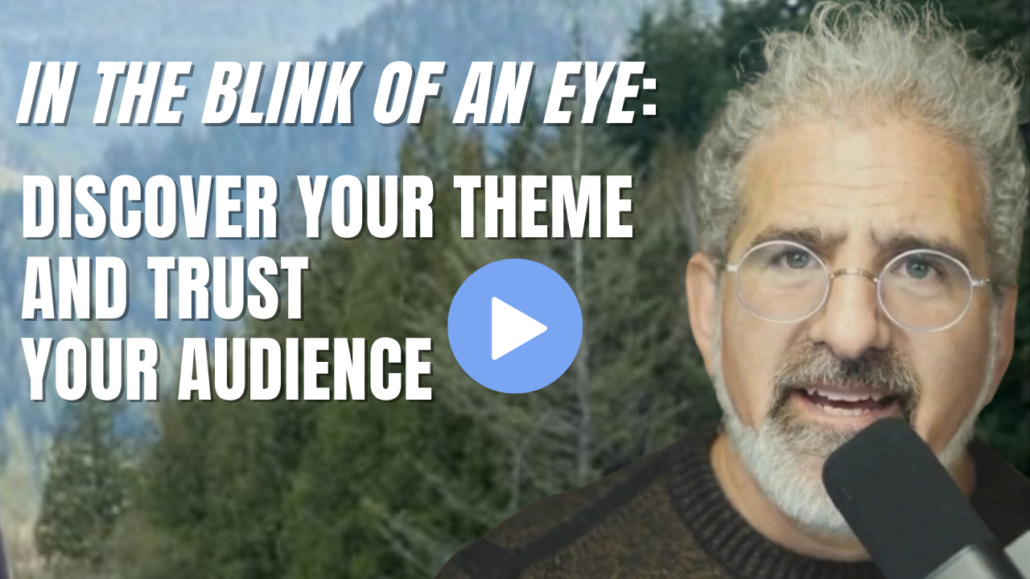
What happens when you take the structure of a movie you love—and try to breathe new life into it?
In this episode of the podcast, Jacob Krueger explores In the Blink of an Eye, the ambitious sci-fi drama written by Colby Day that premiered at Sundance and is now streaming on Hulu. Deeply influenced by Darren Aronofsky’s The Fountain, the film unfolds across three timelines connected by shared questions about death, evolution, and the fragile miracle of human life.
Comparing the two films as a case study, Jake explores three deceptively simple craft lessons: how writers can repurpose the structure of the movies that inspire them toward new ends; why theme only lands when the writer is genuinely wrestling with it; and what you can learn about good dialogue from a family of grunting neanderthals.
Along the way, he shows how even strong films with beautiful performances can lose their emotional punch the moment a writer stops trusting the audience.
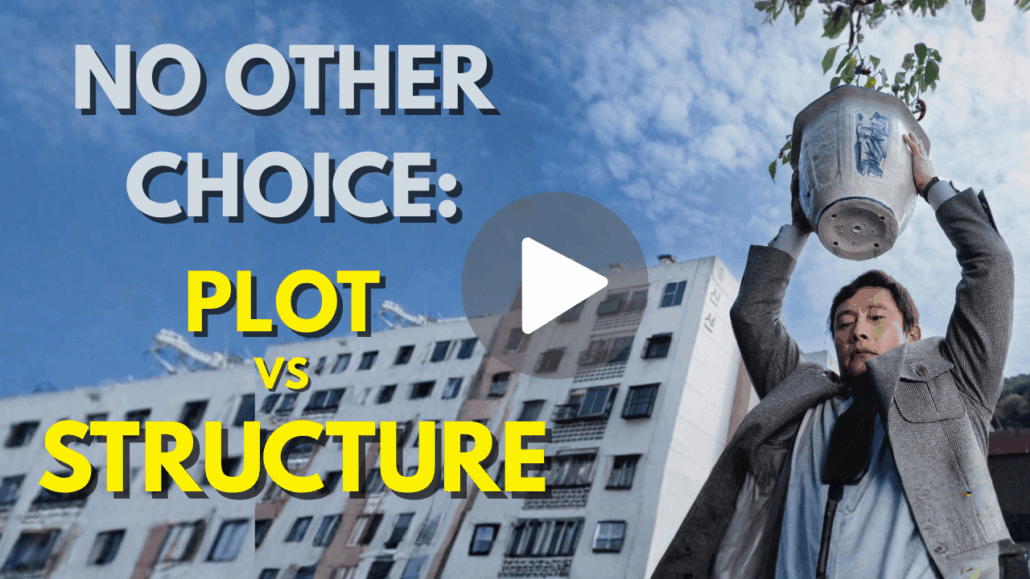
Why do we stay emotionally locked into a story even when the plot sounds flat on paper—or morally repellent in practice? In this episode, Jacob Krueger breaks down Park Chan-wook’s darkly hilarious, deeply unsettling No Other Choice to reveal the engine that makes it so powerful: not plot, but structure. Using the film’s escalating moral pressure as a case study, Jake shows how structure is built from choices—how characters deal with what happens—and how theme emerges when you drive a protagonist to the moment where they truly feel they have no other choice.
What does it actually mean to adapt a story- and how can radically different adaptations emerge from the same source material? In this episode, Jacob Krueger looks at the novel and film versions of Hamnet and the ’90s award darling Shakespeare in Love to show how finding the location of your adaptation shapes character, structure, tone, and theme—and why successful adaptations are defined less by fidelity to source material than by the clarity of your intentions
What does it actually mean to adapt a story- and how can radically different adaptations emerge from the same source material? In this episode, Jacob Krueger looks at the novel and film versions of Hamnet and the ’90s award darling Shakespeare in Love to show how finding the location of your adaptation shapes character, structure, tone, and theme—and why successful adaptations are defined less by fidelity to source material than by the clarity of your intentions

What if raising the stakes in your screenplay has nothing to do with explosions, danger, or bigger plot events?
In this rerelease of a classic episode, Jake takes on one of the most misunderstood producer notes—raise the stakes—and reframes it from the ground up. Stakes, he explains, don’t begin with what happens on screen. They begin with empathy: our connection to a character, what they want, and how hard it is for them to get it.
Every year, writers make New Year’s resolutions with the best intentions—only to watch those resolutions crumble under real life. The problem isn’t discipline or willpower, but the same structural mistakes that cause character arcs to collapse in screenplays. Learn how to build 2026 resolutions that actually work by drawing on the same techniques writers use to create journeys of lasting change for their characters.

What happens when a classic modern “Western” like First Blood is reimagined for a world where moral clarity has collapsed? In this episode, Jacob Krueger analyzes Ari Aster’s Eddington in comparison to First Blood to reveal how theme drives character, action, dialogue, and structure when adapting within a genre.

Pluribus isn’t just a masterclass in character, it’s a study in how the world around your protagonist shapes our empathy. Jake explores how Vince Gilligan uses contrast, irony, and a disruptive structural design in the pilot and second episode of Pluribus to draw us toward a protagonist who isn’t trying to be likable, revealing a deeper craft approach to writing truthful, compelling characters without having to “save the cat.”
With the LA Screenwriting Weekend approaching, Jake sits down with writer and teacher Steven Bagatourian to explore the balance between fire, craft, and voice. Together they dig into why instinct needs structure, why structure needs heat, and how the voice you’re seeking often emerges in the friction between the two.