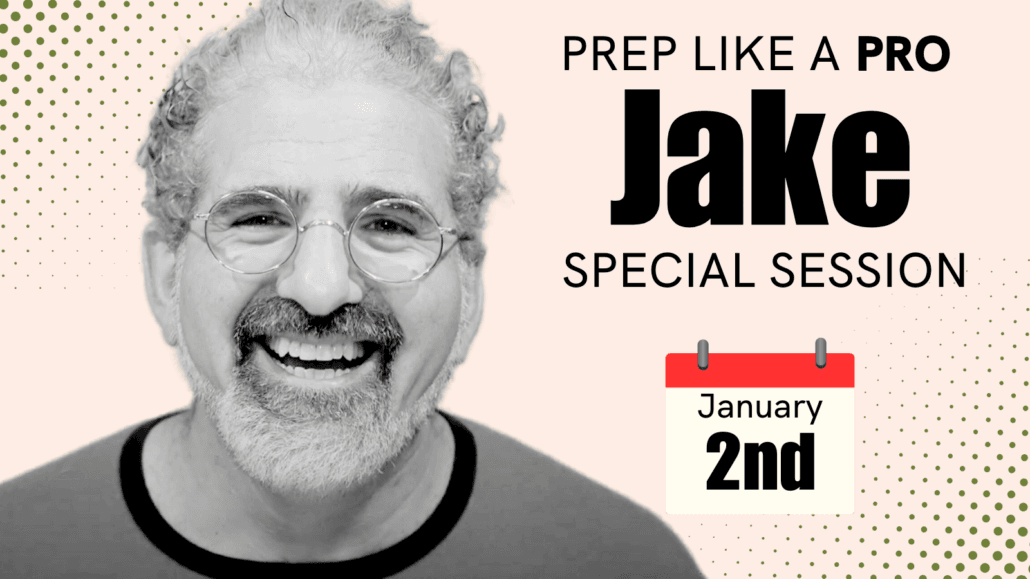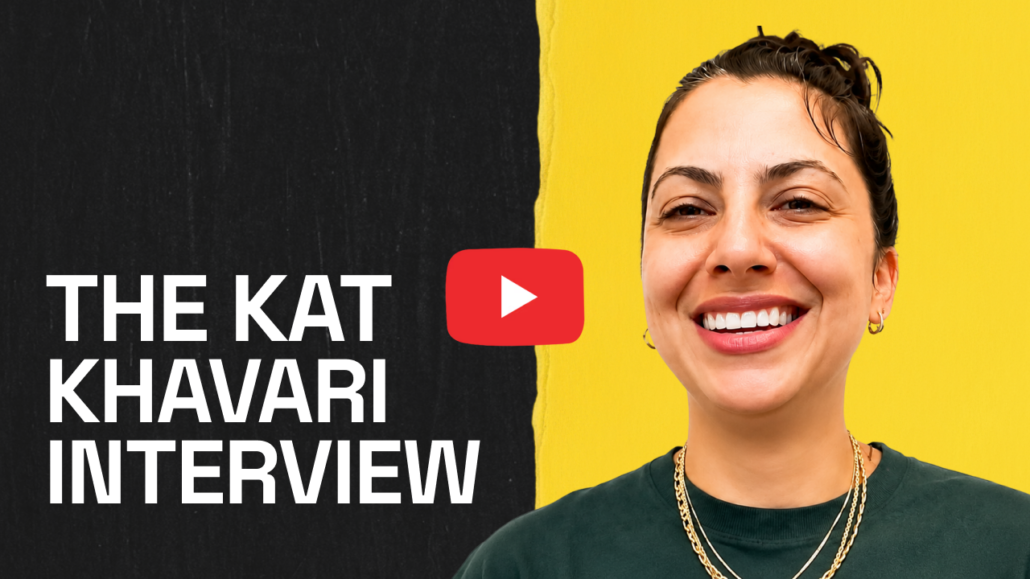
As writer, actor, and Sundance-winning creator Kathreen Khavari joins the Jacob Krueger Studio faculty, Jake sits down with her for a candid conversation about voice, character, creative audacity, and the art of paying attention.
From overheard subway conversations to guerrilla filmmaking, Kat shares how she created her breakout viral short Brain of Terror by paying close attention to the strange, specific rhythms of real people – encouraging writers and actors to stop waiting for permission to create. Together, Jake and Kat explore the relationship between acting and writing, why compelling characters emerge from strong points of view, how dialogue becomes believable through embodiment and rhythm, and why the artist’s job is not to “know,” but to remain curious. Along the way, they unpack the emotional realities of building a creative career: rejection, collaboration, trusting your instincts, and learning how to advocate for your work before anyone else believes in it.
The result is both an introduction to Kat’s perspective as a mentor and artist, and a deeply practical conversation about how curiosity, specificity, and audacity can help you create the work – and career – that feel genuinely your own.
How do you reinvent a TV series without breaking its engine?
Jacob Krueger breaks down Beef Season 2 to explore one of the most difficult balancing acts in screenwriting: evolving a show’s engine without alienating your audience. At first, the second season of Beef appears to deliver the same escalating conflict that powered Season 1 — a small, petty squabble spiraling toward violence. Yet episode by episode, creator Lee Sung Jin subtly shifts the rules of the game until the show operates on entirely new terms, feeling less like a repeat of Beef than the inspired love child of Beef and The White Lotus.
Along the way, Jacob explains how metaphor can function as a creative North Star, and why your narrative becomes stronger when you stack the deck against your central argument rather than in support of it.
What are intrusive thoughts—and what are you supposed to do with them as a writer?
In this episode of the podcast, Jacob Krueger explores intrusive thoughts not as a psychological obstacle, but as a powerful creative tool. Because the real challenge of writing isn’t eliminating distraction—it’s learning how to transform what interrupts you into inspiration. Drawing on the film and play versions of Amadeus, Jake shows how Peter Shaffer externalized his own competing inner voices into two unforgettable characters: Salieri, the embodiment of self-doubt, and Mozart, the expression of divine creative impulse. The result is not just great drama—but a blueprint for turning internal conflict into structure, character, and change.
How do you make a devastating story feel funny—without losing its truth?
In this episode of the podcast, Jacob Krueger explores Dying for Sex, the extraordinary limited series created by Elizabeth Meriwether and Kim Rosenstock, to break down one of the most elusive tools in screenwriting: tone.
Focusing on a single scene from episode 5, Jake shows how the writers take one of the darkest confrontations imaginable—a daughter facing her mother about trauma—and shape it into something that is simultaneously heartbreaking and hilarious.
Along the way, he explores three key ideas: how juxtaposing tones can deepen emotional impact, why tone is something you layer over your script in rewrites, and how tone is central to a television series engine—helping a show feel both the same and different across episodes.
Drawing inspiration from Falstaff’s tragicomic end in Henry IV, Part 2, Tony Soprano’s fractured family, and his own early playwriting misadventures, Jake reveals a powerful truth:
Tone isn’t a single instrument you play.
It’s something you shape—note by note—until the whole piece sings.
What is a TV Bible today, and why do you need one to sell your show?
In this episode of the podcast, Jacob Krueger breaks down the TV Bible not as an industry insider’s document, but as a practical creative tool for proving that your show actually works. Because the real challenge of television isn’t writing a great pilot. It’s building an engine that can generate story—episode after episode—without losing the spark that made the show exciting in the first place. a
Jake explores how TV writing has evolved from the days of syndication to the streaming era, why even strong pilots fail without a clear engine, and what producers, agents, and executives are really looking for when they read your Bible. Along the way, he shows how series like Breaking Bad, Homeland, The Bear, and Seinfeld succeed by delivering a specific feeling that works again and again.
If you’ve ever wondered why some shows run for years while others fall apart after a few episodes, this episode offers a clear and practical framework for building an engine that lasts.
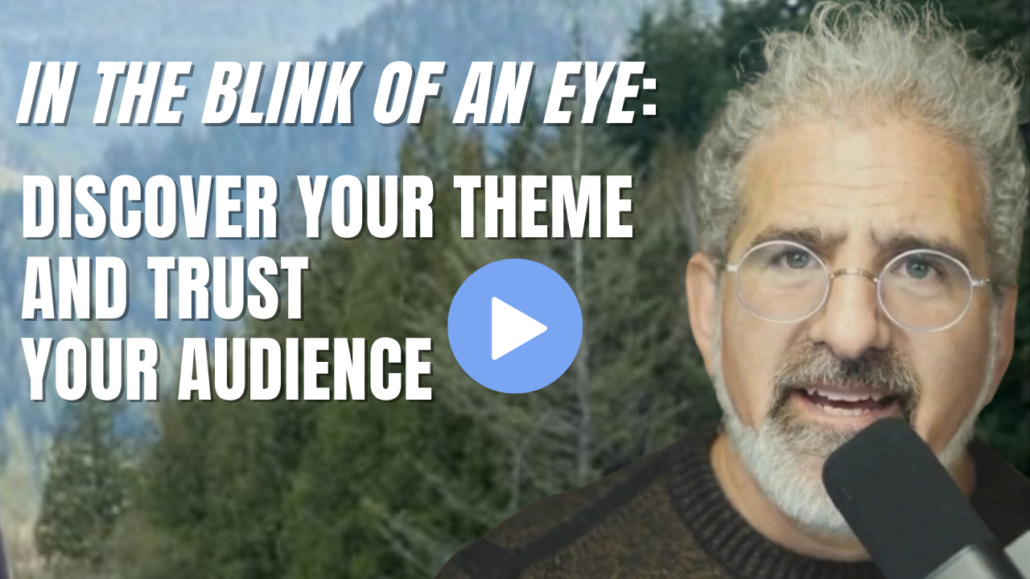
What happens when you take the structure of a movie you love—and try to breathe new life into it?
In this episode of the podcast, Jacob Krueger explores In the Blink of an Eye, the ambitious sci-fi drama written by Colby Day that premiered at Sundance and is now streaming on Hulu. Deeply influenced by Darren Aronofsky’s The Fountain, the film unfolds across three timelines connected by shared questions about death, evolution, and the fragile miracle of human life.
Comparing the two films as a case study, Jake explores three deceptively simple craft lessons: how writers can repurpose the structure of the movies that inspire them toward new ends; why theme only lands when the writer is genuinely wrestling with it; and what you can learn about good dialogue from a family of grunting neanderthals.
Along the way, he shows how even strong films with beautiful performances can lose their emotional punch the moment a writer stops trusting the audience.
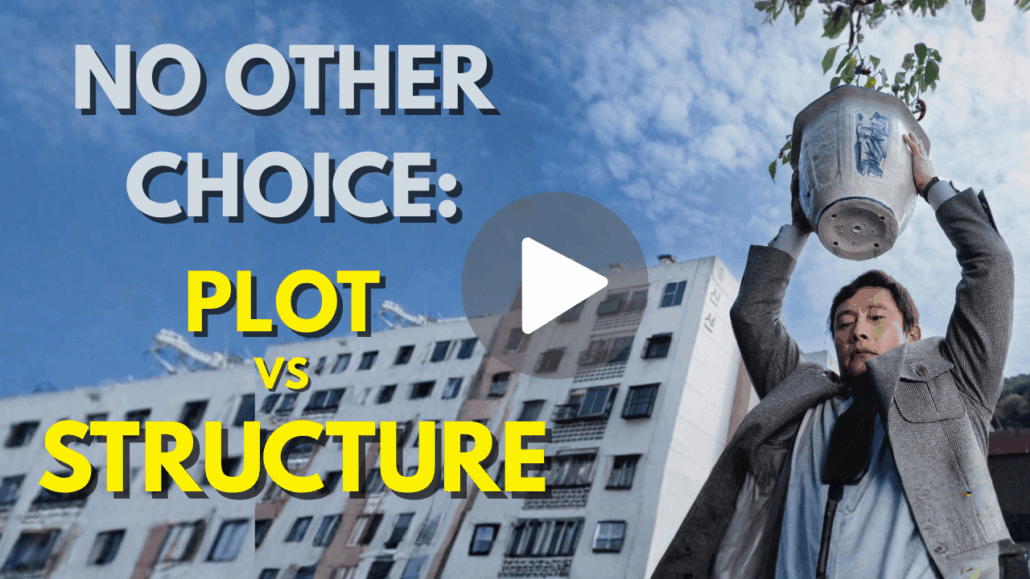
Why do we stay emotionally locked into a story even when the plot sounds flat on paper—or morally repellent in practice? In this episode, Jacob Krueger breaks down Park Chan-wook’s darkly hilarious, deeply unsettling No Other Choice to reveal the engine that makes it so powerful: not plot, but structure. Using the film’s escalating moral pressure as a case study, Jake shows how structure is built from choices—how characters deal with what happens—and how theme emerges when you drive a protagonist to the moment where they truly feel they have no other choice.
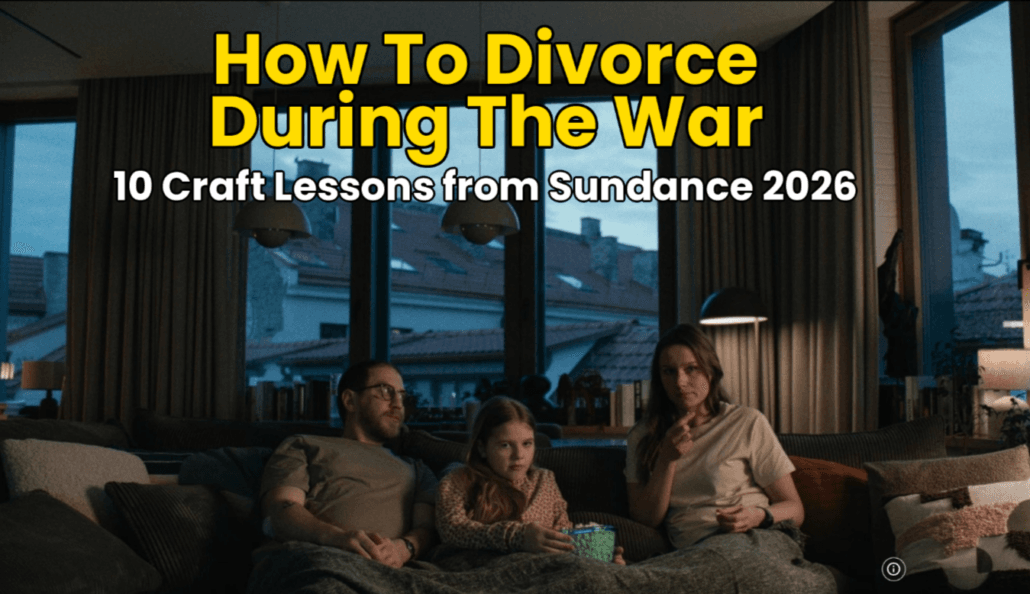
What does it actually mean to adapt a story- and how can radically different adaptations emerge from the same source material? In this episode, Jacob Krueger looks at the novel and film versions of Hamnet and the ’90s award darling Shakespeare in Love to show how finding the location of your adaptation shapes character, structure, tone, and theme—and why successful adaptations are defined less by fidelity to source material than by the clarity of your intentions
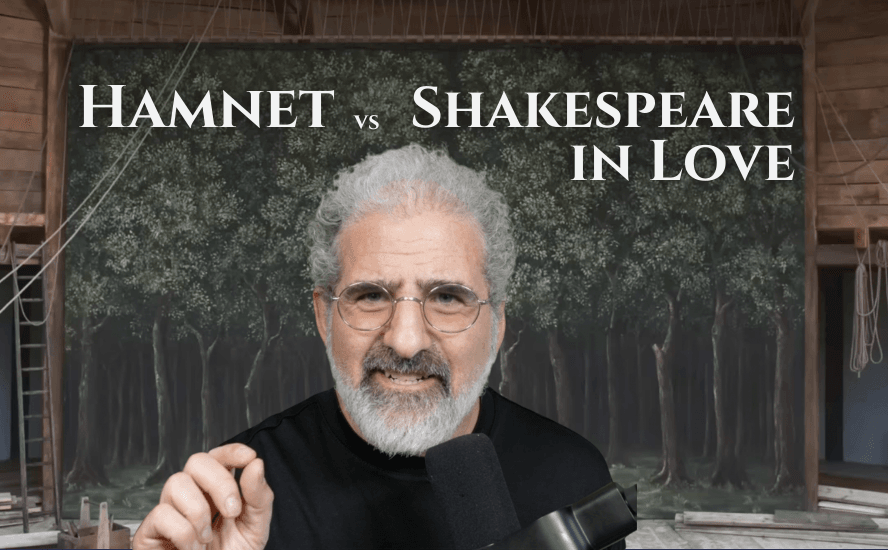
What does it actually mean to adapt a story- and how can radically different adaptations emerge from the same source material? In this episode, Jacob Krueger looks at the novel and film versions of Hamnet and the ’90s award darling Shakespeare in Love to show how finding the location of your adaptation shapes character, structure, tone, and theme—and why successful adaptations are defined less by fidelity to source material than by the clarity of your intentions